The problem is that manual Metrc reporting eats hours every week. Growers juggling multiple rooms, strains, and harvest batches often find data entry errors creeping in, and those errors can trigger compliance violations fast.
This article breaks down what Metrc is, what Michigan specifically requires, what it costs, where to get trained, and how cultivation software can take the pressure off your reporting process.
Key Takeaways
- Metrc is Michigan’s mandated seed-to-sale system for every licensed cannabis business
- Tag fees are $0.45/plant and $0.25/package; CRA covered the support fee through 2024–2025
- Unpaid accounts can lock and halt operations until payment clears
- Cultivation management software cuts manual errors that create Metrc reporting gaps
What Is Metrc and Why Does It Matter in Michigan?
Metrc stands for Marijuana Enforcement Tracking Reporting & Compliance. It's a contracted technology vendor, not a government agency. Michigan's Cannabis Regulatory Agency (CRA), operating under Licensing and Regulatory Affairs (LARA), selected Metrc to run the state's statutory tracking system.
How it works: Metrc assigns RFID tags and serialized identifiers to plants and packages, following each one from cultivation to final sale.
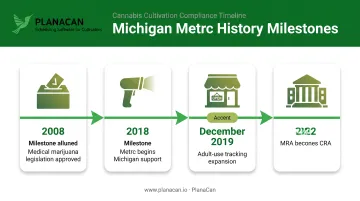
A quick timeline for context:
- 2008 — Michigan voters approve medical marijuana legislation
- 2018 — Metrc begins supporting Michigan's tracking system
- December 2019 — Adult-use tracking expansion begins, letting provisioning centers move existing medical inventory into adult-use channels
- 2022 — The Marijuana Regulatory Agency (MRA) becomes the Cannabis Regulatory Agency (CRA)
As of a May 2024 CRA release, Metrc had tracked more than 1.6 billion events and recorded over $9.7 billion in Michigan cannabis sales since 2018. For cultivators, that scale means every plant tag and package move has to stay accurate from day one.
Metrc data captures harvest batches, testing results, and transfer records between licensed businesses. Every one of those data points originates on the cultivation floor, long before anyone touches a keyboard.
Michigan Metrc Compliance Requirements
Who Must Use Metrc in Michigan
Michigan's administrative rules impose tracking obligations on most license types:
- Class A, B, and C growers, plus excess growers
- Processors
- Provisioning centers and retailers
- Secure transporters
- Safety compliance facilities
- Microbusinesses, including Class A microbusinesses
Designated consumption establishments, event organizers, and temporary events are excluded from the statewide-monitoring requirements under Michigan's rules. If you hold a standard cultivation, processing, or retail license, you report into Metrc daily. Those daily entries cover the plant, harvest, test, and transfer data below.
What Information Must Be Tracked
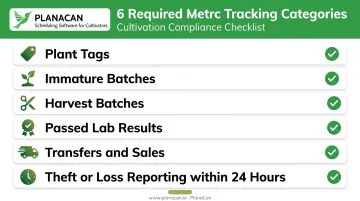
Michigan's rules set clear cultivation tracking rules:
- Plant tags — Any plant over 8 inches tall or wide gets an individual tag that stays with it through the grow cycle
- Immature batches — Each batch needs one recorded name and can't exceed 100 plants
- Harvest batches — Keep batches separated by product type and quarantined while testing is pending
- Passed lab results — Product can't be packaged for sale until Metrc shows a passed test
- Transfers and sales — Every transfer or sale needs a tracked identification number
- Theft or loss — Licensees must notify CRA and local law enforcement within 24 hours of discovering theft or criminal activity
That's a dense set of daily entry points. Miss one harvest-batch update or plant count, and Metrc flags a discrepancy—often before your team notices. Standardize tag, batch, and transfer steps on the floor so the data you enter already matches what auditors will see.
Metrc Training and Account Setup in Michigan
Every Michigan cannabis business needs to complete official Metrc training before going live. Here's the process:
- Get your Michigan license approved first — Metrc access isn't available until then
- Complete New Business training through the Training Signup portal at metrc.com/michigan
- Contact Metrc Support to request account credentials
Metrc also runs periodic in-person training sessions for licensed medical facilities. Announcements go out through their bulletin system, so it's worth checking the bulletin archive regularly.
Metrc's own training library is fairly limited. It covers the basics but rarely addresses cultivation-specific workflow challenges. Many licensees fill that gap with third-party consultants or cultivation management platforms. PlanaCan complements Metrc by helping grow teams standardize SOPs, scheduling, and internal compliance checks before state inspections.
Costs Involved in Michigan Metrc Compliance
Metrc compliance in Michigan comes with two cost categories: tag fees and support fees.
Tag costs:
- Plant tags: $0.45 each
- Package tags: $0.25 each
Support fee: CRA has stated it will use licensing-fee revenue to cover the monthly Industry Support Fee during the 2024-2025 period, rather than billing licensees directly for that portion. Confirm current billing status with Metrc support, since fee structures can shift.
Don't assume your account is automatically safe, either. In March 2023, Metrc threatened to close accounts for more than 100 Michigan cannabis companies over unpaid bills, reporting that roughly 11% of its customer base had outstanding balances. CRA stepped in with a 30-day moratorium to prevent mass shutdowns.
Proactively confirm your account is current with Metrc support. Don't wait for a suspension notice to find out there's a billing problem.
How Cultivation Management Software Simplifies Metrc Compliance
Manual Metrc entry multiplies risk. Every hand-typed harvest date, plant count, or batch transfer is a chance for human error, and errors compound when you're managing multiple flower rooms and strains at once.
Cultivation management platforms like PlanaCan close that gap. Rather than replacing Metrc, PlanaCan acts as the daily workflow layer that keeps floor data organized—so what you enter into Metrc is cleaner and more consistent.
How it works in practice:
- Custom templates for every strain, treatment, and cultivation step keep phase-specific data (pre-veg, veg, flower, harvest, dry, cure) organized and consistent across rooms
- Interactive Gantt chart gives a bird's-eye view of every harvest schedule, with task-level detail showing who completed work, when, and in which room
- Automated team notifications flag tagged users and escalate missed tasks, reducing the chance that a skipped step creates a Metrc reporting gap
- Mobile task execution through iOS and Android apps, including offline capability for the grow floor
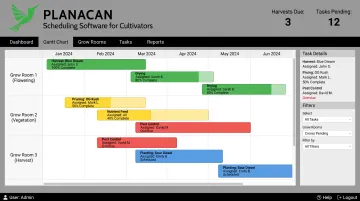
PlanaCan client Garden First Cannabis, managing 16 rotating harvests, reported a 36% increase in completed tasks and a 23% decrease in labor costs after implementing standardized workflows.
PlanaCan co-founder Andreas Hero put it simply: "Simple to use, and effective. Our team knows what they need to do, and when to do it."
That kind of consistency on the floor is what keeps the numbers going into Metrc accurate in the first place.
Top Tips to Stay Compliant with Michigan Metrc
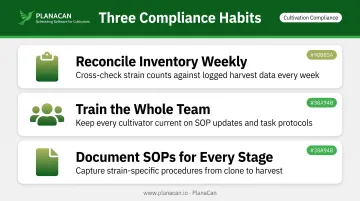
A few habits separate compliant operations from ones that scramble before inspections:
- Reconcile inventory weekly. Compare physical plant counts against Metrc records regularly, not just before an audit.
- Train the whole team, not just compliance staff. Everyone touching plants or product should understand basic Metrc operations.
- Document SOPs for every cultivation stage. Written, version-controlled procedures cut the risk that inconsistent handling creates reporting discrepancies.
Building these habits takes discipline, but it costs far less than a suspended license.
Frequently Asked Questions
What is cannabis software?
Cannabis software includes tools like seed-to-sale tracking, cultivation management, and compliance reporting platforms. These help licensed businesses manage daily operations while meeting state regulatory requirements.
What is the Metrc system?
Metrc is the state-mandated track-and-trace software used to monitor cannabis products from cultivation through final sale. Michigan's Cannabis Regulatory Agency contracts with Metrc to run this system statewide.
How much does Metrc cost in Michigan?
Michigan licensees pay $0.45 per plant tag and $0.25 per package tag. CRA has stated it will cover the monthly Industry Support Fee through the 2024-2025 period, so confirm current billing directly with Metrc.
Where can I get Metrc training in Michigan?
Official training is available through the Training Signup portal at metrc.com/michigan. Many licensees also use third-party consultants or cultivation software platforms for supplemental support.
What happens if a Michigan Metrc account is suspended?
A suspended account can force a licensee to halt operations entirely until it's reinstated. Downtime stacks with further compliance risk and penalties until the account is restored.
Can cultivation software integrate directly with Metrc?
Some platforms connect to Metrc by API; others act as an operations layer beside it. PlanaCan does not replace state seed-to-sale reporting—it standardizes daily cultivation records so your Metrc entries stay accurate and audit-ready.