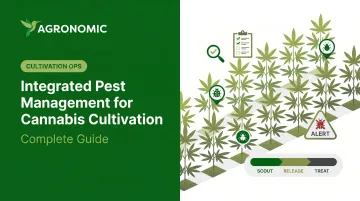
Most operations default to the reactive model: spray when you see a problem, hope it resolves, repeat. Integrated Pest Management (IPM) flips that logic. It's a systematic, proactive framework that layers multiple control tactics — cultural, biological, physical, and chemical — to suppress pest populations before they cause economic harm.
This guide covers what commercial cannabis growers need to know: the core pest threats, the five-step IPM framework, the control methods available at each escalation level, how environmental controls factor in, and how to operationalize IPM across a multi-room grow team.
Key Takeaways
- IPM combines prevention, monitoring, and tiered controls — chemical methods are a last resort, not a first response
- Many US states restrict or prohibit conventional pesticides on cannabis, making non-chemical strategies legally necessary
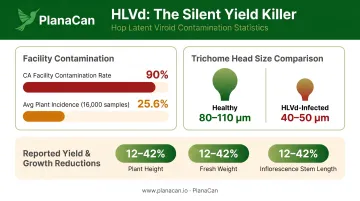
- Hop Latent Viroid (HLVd) hits 90% of California cannabis facilities and suppresses yields before symptoms appear
- Action thresholds must be documented in SOPs — not kept in one grower's head
- At commercial scale, IPM breaks down without clear schedules, assigned ownership, and documented follow-through
What Is Integrated Pest Management (IPM) for Cannabis?
IPM is a coordinated, science-based approach that uses multiple control tactics — cultural, biological, physical, and chemical — to suppress pest populations below damaging levels. Rather than defaulting to pesticide applications whenever something appears, IPM works from a framework: monitor, identify, set thresholds, prevent, then control using the least-risky method available.
The EPA defines IPM as an environmentally sensitive approach that uses pest life-cycle information and available control methods to manage damage economically with the least possible hazard.
Why IPM Is Non-Negotiable in Cannabis
Cannabis growers face tighter pesticide restrictions than virtually any other crop. No pesticide product is federally registered for use on cannabis. Each state sets its own approved-use criteria:
- California: The Department of Pesticide Regulation released approximately 100 approved products in 2024 — a narrow list compared to conventional agriculture
- Oregon: Maintains its own updated guide list of allowable pesticides
- Colorado: Prohibits any pesticide use inconsistent with product labeling
In most licensed US markets, non-chemical pest management isn't optional — it's the regulatory baseline. That compliance reality also has direct financial consequences.
The Business Case
Beyond compliance, IPM protects profitability in three concrete ways:
- Compliance testing: California requires pesticide-residue testing by a DCC-licensed lab before sale. Unapproved pesticide residues are among the most common causes of failed harvest tests — and costly recalls
- Yield protection: Unmanaged pest and pathogen pressure directly reduces sellable biomass and potency
- Input efficiency: Biological and cultural controls, once established, cost less per cycle than repeated pesticide applications
The Most Common Cannabis Pests and Pathogens to Know
A UC Cooperative Extension survey of 101 California cannabis growers documented 14 insect pests, 13 diseases, and 9 vertebrate pests in active cultivation — the pest burden is substantial and diverse.
Insects and Arachnids
The most frequently encountered arthropod threats:
- Spider mites — reproduce rapidly in warm, dry conditions; often detected too late
- Thrips — feed on foliage and flowers; vectors for some plant viruses
- Aphids — cluster on new growth; produce honeydew that attracts secondary problems
- Fungus gnats — larvae damage roots; adults signal overwatering issues
- Whiteflies — persistent in warm environments; develop pesticide resistance quickly
Fungal Pathogens
The four most destructive fungal threats in indoor and greenhouse cannabis:
- Powdery mildew — thrives in high-humidity environments; spreads rapidly across canopy
- Botrytis (gray mold) — destroys inflorescences fast; risk spikes above 70% RH at 17–24°C
- Fusarium — causes root and crown rot; particularly aggressive in hydroponic systems
- Pythium — also triggers root rot; can affect up to 1% of plants annually in hydroponic facilities
Hop Latent Viroid (HLVd)
HLVd deserves its own category. A 2021 survey reported 90% of California cannabis-growing facilities were contaminated, with 30% of plants in affected facilities showing symptoms. Canadian commercial data found 25.6% average incidence across nearly 16,000 samples.
The threat is compounded by asymptomatic spread: infected plants often look normal until late flower, when trichome development collapses. Infected trichome heads measure 40–50 micrometers versus 80–110 micrometers in healthy plants, with documented reductions of 12–42% in plant height, fresh weight, and inflorescence stem length.
Primary transmission is mechanical — contaminated pruning tools and infected propagation stock are the main vectors. A single contaminated blade moving through a healthy block can silently infect dozens of plants before symptoms appear.
The 5 Core Steps of a Cannabis IPM Program
Step 1 — Identification and Monitoring
IPM starts with knowing what you're looking at. Growers should be trained to visually identify common insects, recognize early fungal symptoms, and use magnification tools for arthropod ID. Use at least two identification sources before confirming a diagnosis.
Some pathogens can't be confirmed visually. HLVd requires RT-qPCR testing . A 2024 pathogen-management review found that regular RT-PCR testing combined with removal of infected stock reduced HLVd frequency from 22% to 1% in stock populations. That result is achievable, but only with diagnostic testing built into your monitoring protocol.
Step 2 — Setting Action Thresholds
An action threshold is the specific pest population level or environmental condition at which intervention becomes necessary. Thresholds vary by species:
- A single Fusarium-infected plant may warrant immediate removal
- A few fungus gnats may not require intervention if sticky card counts remain low
- HLVd-positive plants should be flagged for removal to prevent spread
No standardized cannabis-specific action thresholds exist in most jurisdictions . British Columbia's 2019 IPM manual explicitly notes this gap and recommends that thresholds reflect acceptable damage and final-product contamination risk. Your team needs to document facility-specific thresholds in SOPs so every grower knows when to escalate.
Step 3 — Prevention
Most pest and pathogen events are preventable with consistent facility habits. Key protocols:
- Remove plant debris and dead leaf material promptly
- Quarantine incoming clones before introducing them to the main facility
- Never move directly from a flowering room to a veg room without changing or decontaminating
- Sterilize pruning tools between every plant — this is the primary HLVd control
- Use air pressure management to prevent pest migration between zones
- Caulk floor cracks and clean equipment between harvest cycles
Step 4 — Control (Least-Risk First)
Once action thresholds are exceeded, work up the intervention ladder in this order:
- Cultural adjustments — modify environmental conditions, spacing, irrigation, or sanitation practices
- Biological controls — introduce beneficial insects (predatory mites, parasitic wasps) or microbial agents
- Physical controls — yellow sticky traps, UV-C treatment, mechanical removal
- Chemical controls — pesticides registered for cannabis use, applied as a last resort
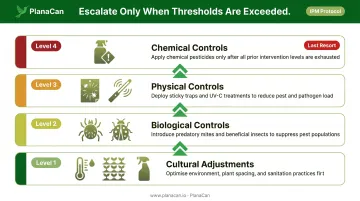
Control decisions must tie back to the thresholds established in Step 2. Treating because "it looks bad" bypasses the data-driven logic that makes IPM effective.
Step 5 — Evaluation
After any intervention, assess whether it worked. Did the pest population drop below threshold? Did the treatment cause any collateral effects on beneficial organisms? Document the outcome and use it to refine your protocols for the next cycle.
Monitoring continues across the entire crop cycle. Each run generates data that sharpens your thresholds, informs control decisions, and builds a documented record your team can rely on going forward.
IPM Control Methods: From Cultural to Chemical
Cultural Controls
Cultural controls are the foundation of IPM — adjustments to the growing environment that make it inhospitable to pests. They cost little beyond staff time, but they require consistent execution.
Core tactics:
- Strict sanitation between harvest cycles (floors, walls, trays, equipment)
- Prompt removal of dead or damaged plant material
- Crop spacing to maintain airflow through the canopy
- Room-to-room movement protocols for staff (no cross-contamination)
- Tool sterilization between plants, every time
The challenge at commercial scale isn't knowing these practices — it's ensuring a team of 10 or 20 cultivators executes them consistently across every room, every day.
Biological Controls
Biological control uses natural predators and beneficial microbes to suppress pest populations. Examples:
- Predatory mites (Phytoseiulus persimilis and related Phytoseiidae) against spider mites
- Parasitic wasps (Encarsia formosa, Eretmocerus eremicus) against whiteflies
- Bacillus-based products — Bacillus subtilis QST 713 (Serenade ASO) and Bacillus thuringiensis appear on Oregon's updated cannabis pesticide guide list for pathogen suppression
Beneficial insects are commercially available through specialized suppliers. They work best as preventive or early-intervention tools — releasing predatory mites into a severe infestation rarely resolves the problem fast enough.
Physical and Mechanical Controls
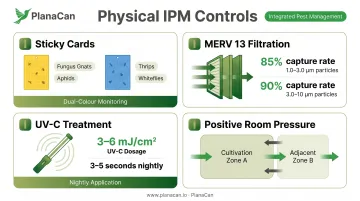
Physical controls provide both monitoring data and active suppression:
- Sticky yellow/blue cards — yellow cards target fungus gnats, aphids, and whiteflies; blue cards improve thrips detection. Weekly inspection of card counts tracks pest pressure trends over time
- MERV 13 air filtration — captures at least 85% of particles in the 1.0–3.0 micron range and 90% of particles 3.0–10 microns, reducing airborne pathogen load entering cultivation spaces
- UV-C light treatment — daily UV-C irradiation at 3–6 mJ/cm² for 3–5 seconds measurably reduces powdery mildew development. Nighttime application outperforms daytime because fungal spores lose their light-activated DNA repair mechanism in the dark
- Positive room pressure — reduces contamination migration between adjacent cultivation zones
Chemical Controls as a Last Resort
Chemical intervention applies only when action thresholds are exceeded and less-risky methods haven't resolved the problem. In licensed cannabis markets, only products on your state's approved list should ever touch your crop.
Irresponsible chemical use creates three compounding risks:
- Pesticide resistance in surviving pest populations
- Harm to beneficial organisms already deployed in the room
- Pesticide residue at harvest — a direct path to failed compliance testing and potential recalls
When chemicals are necessary, follow label instructions precisely. In states like Colorado, deviating from label directions is prohibited — the label is the law, not a suggestion.
Environmental and Facility Controls That Support IPM
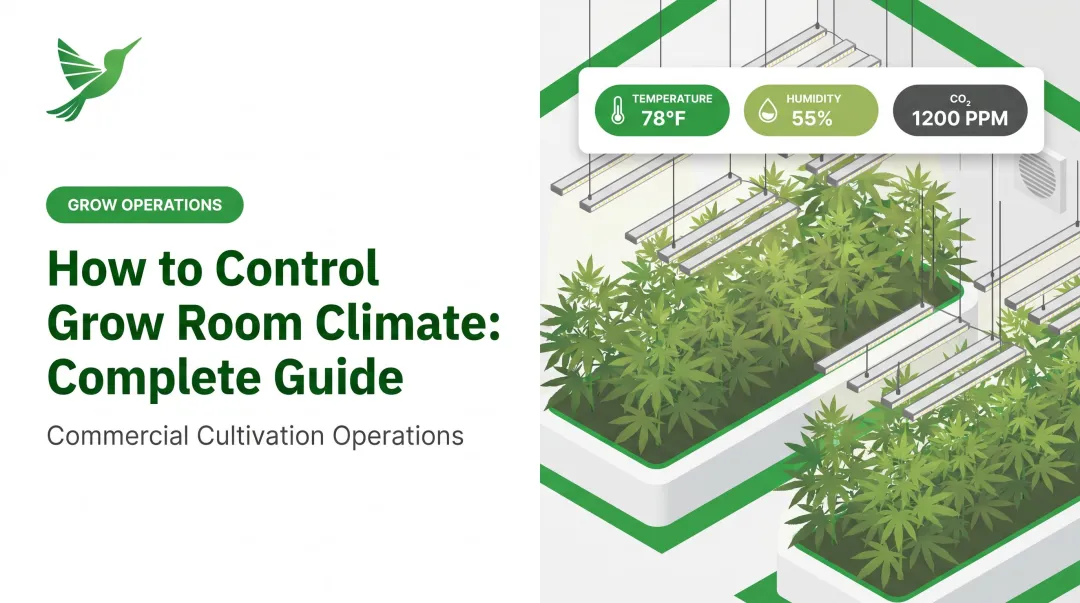
HVACD systems are IPM infrastructure, not just comfort equipment. Temperature and humidity directly govern whether pathogens can establish and spread.
Botrytis thrives above 70% relative humidity at 17–24°C. A 2024 greenhouse cannabis pathogen-management review confirms that high humidity and low vapor pressure deficit (VPD) promote bud rot and powdery mildew, with flowering-stage outbreaks causing the most severe yield and potency losses.
Managing RH through the flowering cycle — not just targeting averages but controlling the transitions — is one of the highest-leverage IPM actions available.
The same equipment managing that RH can become a pest vector when neglected. Per ASHRAE guidance, routine HVACD maintenance should include:
- Keeping air-handling unit condensate pans self-draining and periodically cleaned
- Inspecting ducting and condensate lines for standing moisture
- Clearing microbial slime buildup before it reaches the air stream
Left unchecked, drain pans and condensate lines introduce water molds directly into your facility's airflow — undermining every other IPM layer you've built.
Building IPM Into Your Commercial Grow Operations
Knowing IPM and running IPM are two different things. In a facility with multiple grow rooms and a team of cultivators across multiple shifts, pest management protocols can't live in someone's memory. The gap between what the head grower knows and what the team executes consistently is where most commercial operations lose ground.
Standardize With SOPs and Treatment Templates
For each pest threat or recurring protocol, build a documented workflow that defines:
- The specific task (scouting, spray application, sanitation step)
- The timing within the crop cycle
- The responsible team member
- What data to collect and what to look for
- When to escalate to the next intervention level
SOPs attached to individual tasks — accessible on the grow floor at the moment of execution — eliminate the ambiguity that leads to missed steps.
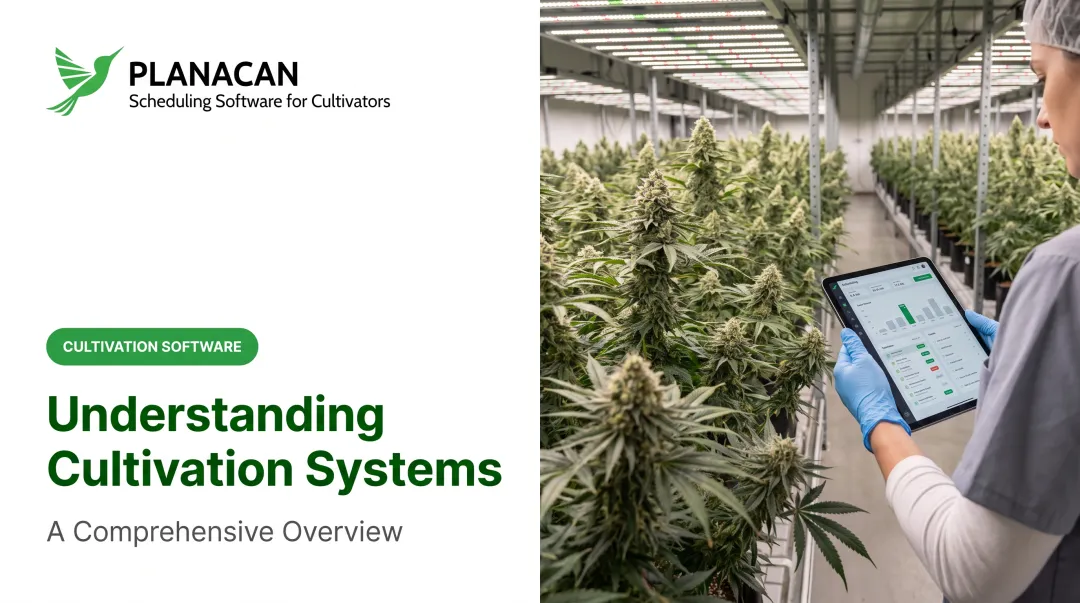
Schedule and Track With Cultivation Management Software
At commercial scale, IPM tasks need to be on the calendar, assigned to specific team members, and tracked to completion — not added as informal reminders.
PlanaCan is built for exactly this operational challenge. Grow teams can build custom IPM treatment templates — spray schedules, scouting rotations, sanitation protocols — and schedule them directly onto a Gantt-style cultivation calendar. The platform notifies team members each day of what's due, with task completion tracked in real time so managers can see what was done, by whom, and what was missed.
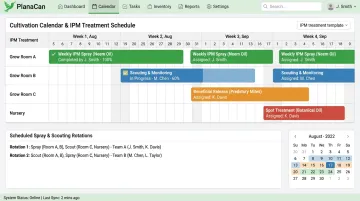
For MSOs managing multiple sites, templates built once can be deployed across locations, standardizing IPM execution without rebuilding workflows from scratch at each facility. Each task also supports data collection, building per-batch logs that document treatment applications, environmental observations, and outcomes across harvest cycles.
Use Data to Improve Each Run
Consistent pest management comes down to documentation and iteration, not the most aggressive spray program. Growers who log what they applied, review what worked, and refine protocols before the next cycle starts are the ones who stop fighting the same problems run after run.
Tracking pest trends, treatment outcomes, and environmental notes across runs identifies patterns — a room that repeatedly develops powdery mildew, a strain that consistently attracts spider mites, a time of year when thrips pressure spikes. Over time, that data shifts IPM from reactive firefighting into a protocol your team actually gets better at executing with each harvest.
Frequently Asked Questions
What are the 5 steps of integrated pest management?
The five steps are: identification and monitoring, setting action thresholds, prevention, control (using least-risk methods first), and evaluation after each crop cycle. The framework is cyclical: monitoring continues throughout the grow, not just when a problem surfaces.
What is IPM in a cannabis cultivation facility?
IPM in a cannabis facility is a structured, multi-tactic approach to pest and pathogen management that prioritizes non-chemical methods. It's built around documented action thresholds and SOPs, designed to protect both crop quality and regulatory compliance across every harvest cycle.
What are the most common pests in cannabis cultivation?
The most frequently encountered threats include spider mites, thrips, aphids, fungus gnats, whiteflies, powdery mildew, Botrytis (gray mold), and Hop Latent Viroid (HLVd). Early detection through regular scouting is the single most important management tool for all of them.
How often should cannabis plants be scouted for pests?
At minimum, weekly visual inspections across all grow rooms, with sticky cards checked on a defined schedule. High-value strains, facilities with prior pest pressure, or any room receiving new clone intake should be scouted more frequently — always inspect at clone intake.
Can IPM help cannabis operations pass compliance testing?
Yes. IPM reduces compliance risk by limiting reliance on non-approved pesticides — a leading cause of failed harvest tests. Biological and cultural controls leave no chemical residue, and an action-threshold framework keeps any chemical interventions compliant and documented.