Heading into 2026, cultivation, processing, and retail operators face tighter scrutiny with less room for manual error. Compliance software has evolved well past simple seed-to-sale logging. Today's platforms handle automated reporting, audit trails, and workflow management that regulators expect to see documented.
This guide compares the top cannabis compliance platforms for 2026 and breaks down how to pick the right one for your operation.
TL;DR
- Compliance software automates state-mandated tracking (METRC, BioTrack) and reporting to cut regulatory risk
- License type (cultivator, processor, or dispensary) drives which modules and integrations you actually need
- Prioritize direct state track-and-trace integration, audit-ready reporting, and multi-license scalability
- Shortlist vendors on state coverage, audit trail depth, and room to scale licenses through 2026
Overview of Cannabis Compliance Software in the US Market
Cannabis compliance software automates the regulatory tracking, reporting, and documentation that state cannabis programs require. It's the layer that turns raw plant and sales data into the reports auditors demand.
Most states don't let operators choose their own tracking method. They mandate a specific track-and-trace system:
- METRC — the largest network, with 30 regulatory contracts across US states, territories, and DC, according to METRC's official partner directory
- BioTrackTHC — the official system in states including New Mexico, Florida, and Hawaii
- Leaf Data Systems — used in select markets, though some states have since migrated to in-house systems
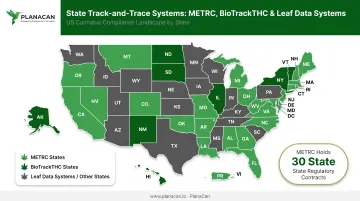
Because these government systems form the backbone, most third-party compliance software is built to plug into them rather than replace them. The list below compares platforms on integration depth, target business type, and reporting capability.
Top Cannabis Compliance Software for 2026
We ranked each platform on state-system integration depth, automation, audit readiness, and reliability across license types—not brand recognition. Track-and-trace systems (and the tools built on them) are not the same as a cultivation operations layer; many growers run both so floor work stays aligned with state reporting.
METRC
METRC is the government-run track-and-trace backbone required in most legal US cannabis states. Operators do not buy it as third-party software—it is the regulatory system itself—and most platforms on this list sync to it.
Per METRC's POS and ERP integration docs, its open API connects ERP, lab, logistics, and related systems. Validated integrators complete training, sign an API agreement, and show they can operate under home-state licensing rules.
| Attribute | Detail |
|---|---|
| Coverage | Mandated across most licensed US cannabis markets |
| Best For | Any licensed operator needing baseline state-mandated compliance |
| Limitation | Not a full business management tool; usually paired with a POS or ERP |
BioTrackTHC
BioTrackTHC is a state-designated traceability system and the official platform in several markets, including New Mexico, Florida, and Hawaii. Direct government partnerships help it stay current as rules change.
| Attribute | Detail |
|---|---|
| Coverage | Official system in states including New Mexico, Florida, and Hawaii |
| Best For | Operators licensed in BioTrack-mandated states |
| Key Feature | In-depth compliance reporting and audit support |
ComplianceQuest
ComplianceQuest is a quality and compliance management platform built natively on Salesforce. Cannabis-specific modules cover audit management, CAPA (corrective and preventive action), and documentation control.
Core strengths:
- Enterprise automation and customizable reporting
- Controls aligned with 21 CFR Part 11—electronic signatures, audit trails, and access restrictions
- Seed-to-sale tracking on Salesforce infrastructure
| Attribute | Detail |
|---|---|
| Focus | Compliance, quality management, and audit readiness |
| Best For | Larger multi-site or vertically integrated operators |
| Integrations | ERP, CRM, and other operational tools |
Distru
Distru is a cannabis-specific ERP that folds compliance, inventory, and CRM into one system. Tracking sits alongside sales, production, and cultivation data so teams get supply-chain visibility without a separate compliance bolt-on.
In 2025 it raised $6 million, per MJBizDaily, to expand compliance, integrations, and order management.
| Attribute | Detail |
|---|---|
| Focus | ERP with compliance, inventory, and order management |
| Best For | Cultivators, processors, and distributors that need end-to-end visibility |
| Integrations | POS, accounting, e-commerce, cultivation management |
GrowerIQ
GrowerIQ targets cultivation and manufacturing. It combines seed-to-sale tracking, ERP functions, and quality management for licensed producers—not retail dispensaries.
In July 2025 it was validated as an official METRC integrator across 10 US jurisdictions, per GrowerIQ's METRC integrator announcement. Confirm current jurisdiction coverage and validation scope for your license before you sign.
| Attribute | Detail |
|---|---|
| Focus | Seed-to-sale, ERP, and quality management for producers |
| Best For | Licensed cultivators and processors (not retail dispensaries) |
| Integrations | METRC, QuickBooks, lab testing portals |
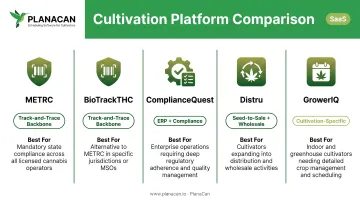
How We Chose the Best Compliance Software
A common mistake: picking software based on name recognition instead of confirming direct integration with your specific state's track-and-trace system. A platform that works beautifully in Colorado might not have validated integration in your state at all.
Our evaluation weighed:
- State system validation — confirmed integration, not just a claim of compatibility
- Automation depth — how much manual data entry the platform actually eliminates
- Audit-trail reliability — time-stamped records, permissions, and export capability
- Workflow fit — whether the tool matches cultivation, processing, or retail operations specifically
- Scalability — performance across multiple licenses and locations
- Regulatory agility — how quickly the vendor adapts as state rules change
Compliance Is Only Half the Equation: Operational Accountability for Cultivators
Here's the gap most compliance guides skip: software that reports data to the state doesn't fix the daily scheduling chaos that causes compliance errors in the first place.
METRC and BioTrack tell regulators what happened. They don't tell your team what needs to happen today, who's responsible, or whether a treatment step got skipped. That's where a lot of preventable violations start: a missed task, an undocumented SOP deviation, a whiteboard schedule nobody updated.
This is the layer PlanaCan operates in. It's built specifically for cultivation teams and sits alongside your compliance platform, not on top of it:
- Custom treatment templates for every strain and cultivation phase, so SOPs are documented and repeatable
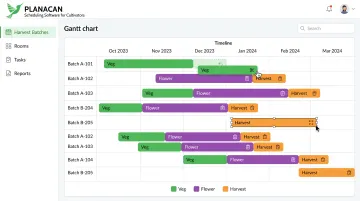
- Interactive Gantt chart scheduling giving a bird's-eye view of every harvest, with drag-and-drop rescheduling that shifts downstream tasks automatically
- Automatic daily notifications via push or email, so team members know exactly what's due each day
- Batch and harvest-level history, tracking who completed what, when, and with what notes attached
PlanaCan connects data with METRC and BioTrack in applicable markets, including California, New Jersey, Michigan, Ohio, and New York, without duplicate entry.
Standardized, documented workflows are often exactly what auditors scrutinize hardest. When Garden First Cannabis adopted PlanaCan, it managed 16 rotating harvests, increased completed tasks by 36%, and cut labor costs by 23%. PlanaCan co-founder Andreas Hero describes the shift simply: your team knows what they need to do, and when to do it.
Conclusion
The right compliance software matches your business type and validates direct integration with your state's track-and-trace mandate.
Before signing anything:
- Confirm the platform is validated for your specific state system
- Check scalability if you operate — or plan to operate — multiple licenses
- Separate what you need for state reporting from what you need for daily operational accountability
If you're a cultivator looking to strengthen the operational side, scheduling, SOP documentation, and team accountability, alongside your compliance tracking, PlanaCan's workflow tools are worth a look.
Frequently Asked Questions
What is the best POS software for cannabis dispensaries?
Top dispensary POS platforms combine compliance reporting with sales and inventory tools. The best choice depends on your state's requirements, budget, and what you need it to integrate with.
How do I choose cannabis compliance software for my operation?
Match the platform to your license type and your state's track-and-trace system (METRC, BioTrack, or Leaf). Prioritize audit-ready reporting, the integrations you actually need, and total cost—including implementation—not just the monthly fee.
Is METRC the same as compliance software?
No. METRC is the state-run tracking system itself. Compliance software typically integrates with METRC to automate reporting and cut down on manual entry.
Do cultivators need different compliance software than dispensaries?
Yes. Cultivators need batch-record and cultivation-specific tracking, while dispensaries need point-of-sale and retail transaction compliance. Match the platform to your business type.
How much does cannabis compliance software cost?
Pricing varies by per-user, per-site, or enterprise models, and most vendors quote based on your operation's size. Compare implementation fees alongside monthly costs before signing.
Can compliance software prevent state audits or fines?
No. It reduces reporting errors and improves audit readiness, but it doesn't eliminate your compliance obligations or guarantee you won't face fines.